



Employee Advocacy
Your Leaderboard Is Working for Five People and Against Everyone Else
Recognition beats prizes, and the same five names winning three months straight tells everyone else the game is not for them. Design against your top performers.

 LoginSchedule demo
Executive sponsorship is the strongest predictor of early advocacy adoption. Who to activate first, how to match the ask to the executive, and why the real work is coordination.
Sep 22, 20266 min read

Recognition beats prizes, and the same five names winning three months straight tells everyone else the game is not for them. Design against your top performers.

Struggling programs publish more when they should publish less. A hard cap, named owners, and one test: would an employee share this without feeling like they're doing corporate PR?

Program health metrics belong to the admin. Business impact metrics belong to whoever signs the check, and they only exist if you chose them in week one.

The real failure mode is a good launch followed by a silent quarter, and the early-warning signals show up four to eight weeks before anyone names the problem.

Company-wide is the right ambition. The programs that get there fastest all start the same way, and the ones that stall usually die in their own reporting.
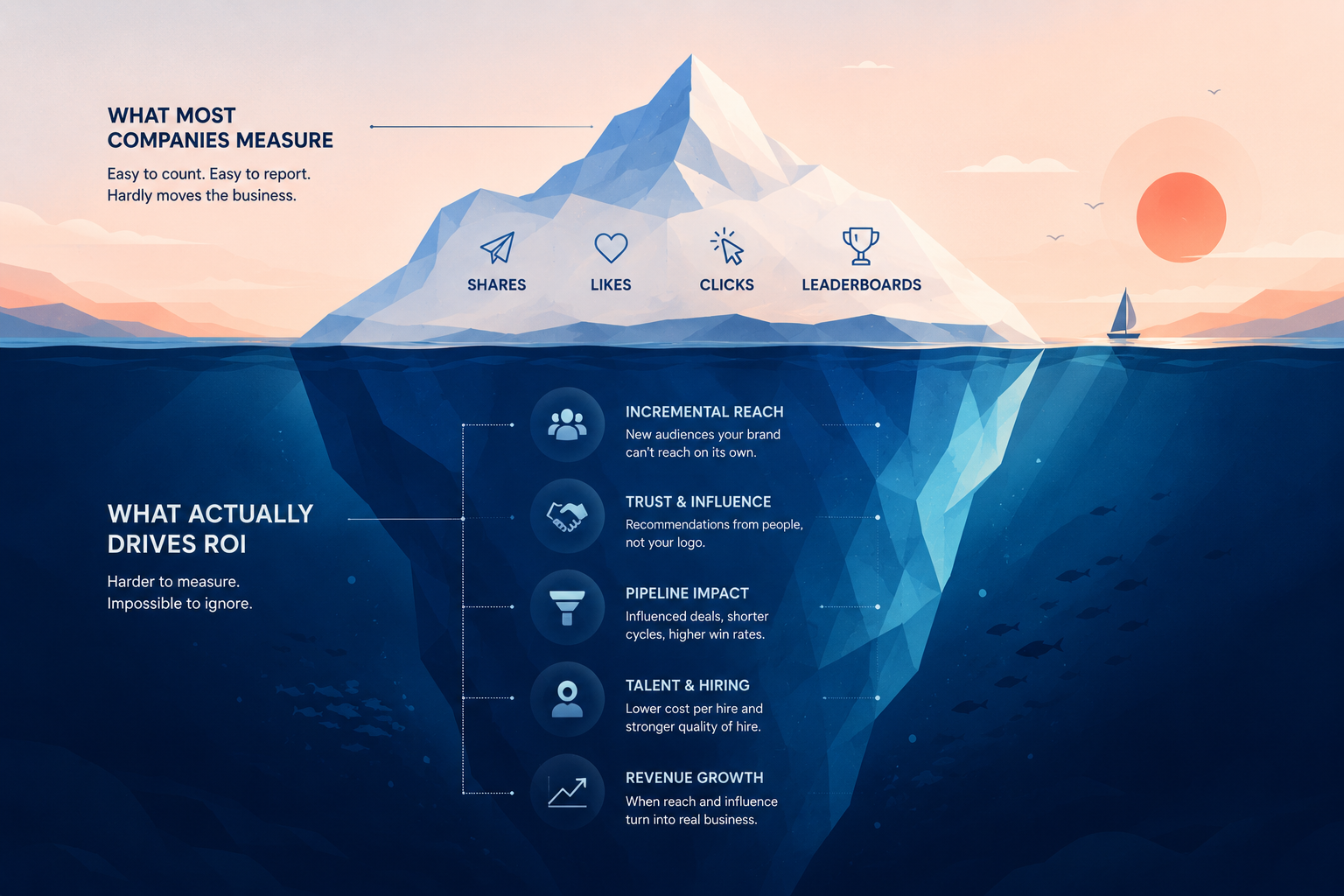
Share counts do not prove value. Here is the framework for proving what employee advocacy actually returns: incremental reach, EMV, and pipeline influence.


Banks do not usually have a LinkedIn policy problem first. They have a scale and visibility problem. Here's why LinkedIn compliance is harder for banks than it looks.


FINRA social media compliance is not just about risky posts. It is about classification, supervision, testing, and whether LinkedIn oversight actually matches reality.

Many firms think LinkedIn retention is already covered. Often it is only partially covered. Here's where SEC Rule 17a-4 and social media compliance usually break down.
See the platform that comms, marketing, and compliance teams use to run their advocacy program.